
Long Road Home
Play Long Road Home
Long Road Home Screenshots















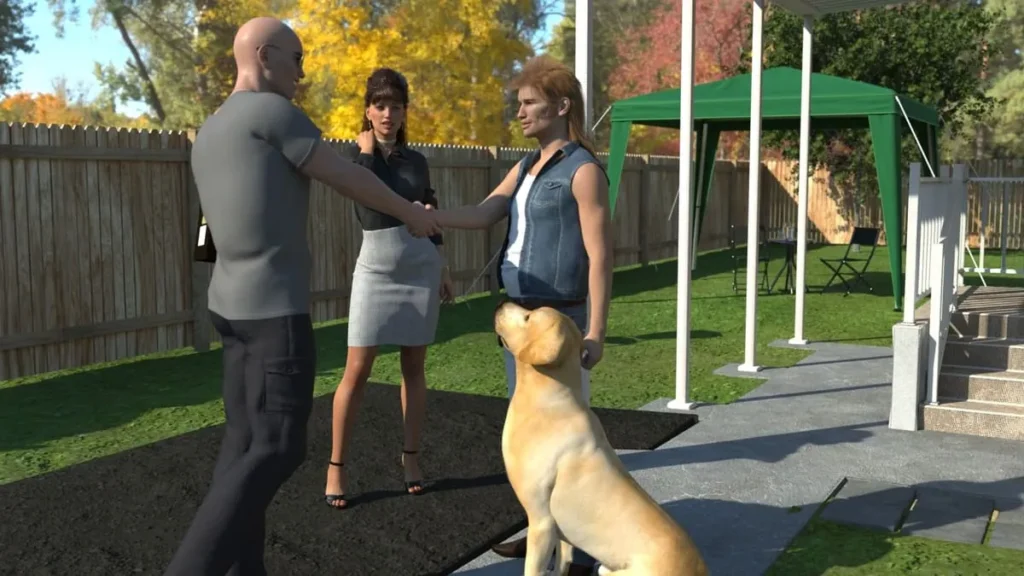










Long Road Home review
Master the narrative-driven visual novel with strategic gameplay and branching storylines
Long Road Home stands out as a narrative-driven interactive experience that transcends traditional gaming conventions. Developed by OBDGames, this visual novel combines mature storytelling with strategic resource management and psychological depth. Players follow a protagonist navigating life after prison, facing complex moral choices that permanently shape character relationships and story outcomes. With over 300 possible story paths and innovative gameplay mechanics that integrate narrative elements with survival systems, Long Road Home offers a unique blend of emotional storytelling and strategic decision-making. Whether you’re exploring the game for the first time or seeking to understand its intricate systems, this guide provides essential insights into what makes this title a compelling interactive experience.
Understanding Long Road Home’s Core Gameplay and Narrative Framework
You’ve just walked out of the gates, the world sharp and unfamiliar after years inside. You’ve got a duffel bag, a head full of ghosts, and a pressing question: what now? This is the powerful, unsettling premise of Long Road Home. 🧳 This isn’t just another visual novel; it’s a raw, strategic journey where every small choice echoes for miles. Your mission is to find meaning, rebuild a life, and navigate a town on the brink of a biker war, all while managing your sanity, your relationships, and your dwindling cash. Forget simple dialogue trees—here, your survival instincts and moral compass are the core Long Road Home gameplay mechanics.
What sets this experience apart is its genius fusion of genres. It pairs the deep, branching narrative of an interactive storytelling visual novel with the constant, tangible pressure of a life-simulation game. Think of it like The Sims, if every action carried the emotional weight of a life-altering decision. Your character’s needs—sleep, hunger, social interaction, mental health—aren’t just bars to maintain; they are the very filters through which you experience the story and make your narrative-driven game choices. A tired, hungry character will see the world through a lens of desperation, unlocking different, often riskier, paths than one who is well-rested and stable.
This chapter is your guide to understanding that unique framework. We’ll break down how your management decisions become the narrative, how your chosen past defines your future, and how a single act of kindness—or cruelty—can reshape your entire world. Let’s hit the road. 🏍️
What Makes Long Road Home’s Storytelling Unique?
Most games tell you a story. Long Road Home gives you the tools to live one. Its uniqueness lies in treating mature themes—trauma, poverty, moral ambiguity, violence—not as window dressing, but as functional, interactive systems. The psychological struggle of your protagonist isn’t just described in text; it’s a mechanic you manage. A “Stress” or “Despair” stat might limit your dialogue options, push you toward aggressive solutions, or even trigger narrative events where your past comes crashing into the present.
The external conflict, a brewing war between two biker gangs—the established, tyrannical Reapers and the rebellious, idealistic Nomads—isn’t a cutscene you watch. It’s an environmental pressure that seeps into every choice. 💀 Do you take a lucrative but dangerous job smuggling for the Reapers to pay your rent? Or do you align with the Nomads, gaining allies but making yourself a target? This conflict creates a constant, thrilling tension where your personal survival story collides with a larger, violent drama.
But the true heart of this interactive storytelling visual novel is the people. Every character you meet, from a cynical bartender to a fellow ex-con, is written with profound psychological depth. Relationships are built through consistent action, not just flattering dialogue. Helping a neighbor fix their bike, remembering a friend’s preference for a certain drink, or simply choosing to listen when they talk—these actions build Trust, a crucial resource. High trust unlocks personal quests, crucial support in tough times, and even alters how characters react to your major moral decision-making game design moments. Your network is your safety net, and its strength is a direct result of your investment.
How Strategic Resource Management Drives the Narrative
Here’s where Long Road Home truly separates itself from the pack. You might think resource management is about numbers—and it is—but here, every number is a story beat.
Let’s get practical. You control four key pillars:
* Money:💰 Pays rent, buys food, repairs your bike (your key to freedom and jobs).
* Time: ⏳ Each day has limited actions. Do you work a shift, scout for information on the gangs, or spend time healing your mind at a support group?
* Physical & Mental State: Your energy, hunger, and stress levels. Let these dip too low, and you’ll be locked out of positive interactions and become prone to failures or destructive choices.
* Social Capital: The trust and favor you build with individuals and factions.
These aren’t separate from the story; they are the story’s engine. Say you need information from a guarded member of the Reapers. You could:
1. Pay for it (Money): Quick, but expensive and cold.
2. Do a favor for their friend (Social Capital/Time): Takes longer, but builds a connection.
3. Intimidate them (requires low Stress/High Energy): Fast and free, but risks violence and increases your notoriety.
The resource management storytelling forces you to role-play authentically. A desperate character short on rent might resort to crime, triggering a whole new branch of the story focused on evasion and guilt. A character who prioritizes their mental health might miss a time-sensitive opportunity but gain a crucial, stabilizing ally. The management layer ensures your narrative-driven game choices have a tangible, sometimes punishing, cost. You’re not just picking what you want to say; you’re budgeting your very humanity to get through the week.
Pro Tip: Always keep a small emergency cash fund. You never know when you’ll need to skip a shady job offer or pay for a sudden medical bill. This simple act of foresight can keep you from being forced down a path you don’t want to take.
Exploring the 300+ Story Outcomes and Player Agency
The famous “300+ story outcomes” isn’t marketing fluff. It’s the mathematical result of a narrative system where every layer of your identity and action compounds. Your agency is total, and the consequences are real. This is the pinnacle of story outcomes and player agency.
It starts with your foundation: character customization. Are you a Soldier, grappling with military-grade PTSD and possessing skills in tactics and discipline? Or are you a Con Artist, a silver-tongued survivor with a knack for deception and lock-picking? This initial choice isn’t cosmetic; it fundamentally rewires your gameplay experience, your available solutions to problems, and how the world perceives and speaks to you.
| Customization Choice | Gameplay Approach | Example Dialogue & Narrative Opportunities |
|---|---|---|
| Soldier Backstory 🪖 | Strategic, disciplined. Excels at physical tasks, planning, and intimidation. May struggle with civilian social nuances. Resources like “Composure” are vital. | Can de-escalate bar fights using tactical commands. May have flashback-driven episodes that unlock unique, harsh perspectives on violence. Offered jobs as security or high-risk retrieval. |
| Con Artist Backstory 🃏 | Adaptive, manipulative. Excels at persuasion, hacking, forgery, and sneaking. Lower starting reputation but more ways to bypass obstacles. | Can fast-talk past guards or forge documents. Dialogue options often involve lies, flattery, or clever misdirection. Can sniff out others’ scams and turn them to their advantage. |
These paths diverge from minute one and spiral outward. Let’s talk about consequences. The game masterfully employs “butterfly effect” design. In my first playthrough, I was broke and stressed early on. I passed a wounded stranger in an alley, a Nomad who’d been jumped. Helping him would cost time and a medical kit I couldn’t spare. I walked away. It seemed insignificant.
Weeks later in the game, I was captured by the Reapers. Beaten and with no allies nearby, I faced a grim narrative-driven game choice: betray a location or be killed. Suddenly, the door burst open. It was that stranger, now flanked by his Nomad crew. “You left me for dead,” he said. “But my crew doesn’t operate like the Reapers. We’re giving you a chance we didn’t get.” He offered me a brutal choice: fight my way out with them now, or stay and face my fate. That early, resource-driven decision had woven a thread of karma that reappeared at the most critical juncture, creating a stunning moment of story outcomes and player agency I never saw coming. 🤯
This is the core of the game’s moral decision-making game design. There is rarely a clear “right” answer. Is it better to steal medicine for a sick friend or watch them suffer? Should you expose a corrupt cop if it means losing police protection for your neighborhood? The game refuses to judge you. It only reacts, with profound and often delayed consequences. Your character development in Long Road Home is literally the sum of these impossible calls. You aren’t leveling up a “good” or “evil” meter; you’re becoming a specific person forged by fire, and the game’s 300+ endings are there to reflect every possible iteration of that person—from a broken soul who rejoins a gang for belonging, to a healed individual who becomes a community pillar, and everything in between.
Mastering Long Road Home means embracing this complexity. You’re not just reading a story or playing a sim; you’re conducting an orchestra of needs, relationships, and morals where every instrument has a will of its own. Your journey home is long indeed, but every scar, every ally, and every hard-won dollar makes it uniquely and powerfully yours. The road is waiting. What kind of person will you be when you finally arrive? 🏠
Long Road Home represents a sophisticated approach to interactive gaming, where narrative depth and strategic gameplay intertwine to create meaningful player experiences. The game’s strength lies in its refusal to offer simple solutions—every choice carries weight, and consequences ripple through the story in unexpected ways. From managing resources at a struggling roadside bar to navigating complex relationships with mysterious travelers and rival biker gangs, players must constantly balance immediate needs against long-term goals. The 300+ possible story outcomes ensure that each playthrough feels distinct, rewarding players who experiment with different approaches and character builds. Whether you’re drawn to the psychological complexity of the protagonist’s journey, the strategic depth of resource management, or the emotional impact of permanent narrative consequences, Long Road Home offers a compelling experience that challenges conventional gaming narratives. For those seeking a game that respects player intelligence and embraces moral ambiguity, this title delivers a memorable interactive journey worth exploring.