Apocalust
Play Apocalust
Apocalust Screenshots















Apocalust review
Explore the immersive adult visual novel experience with branching storylines and moral decision-making
Apocalust stands out as a compelling adult-oriented interactive narrative game that combines engaging storytelling with meaningful player agency. Developed by Psychodelusional, this visual novel experience puts you in the role of a young photographer whose life transforms when he encounters an ancient, otherworldly relic granting metaphysical abilities. The game’s core appeal lies in its sophisticated branching narrative system where every decision creates ripples throughout the story, affecting relationships, environmental conditions, and available content. Whether you’re drawn to complex moral choices, character development, or immersive world-building, Apocalust delivers a unique blend of supernatural elements and adult-themed storytelling that invites exploration of personal values and consequences.
Understanding Apocalust: Core Gameplay and Narrative Foundation
Let’s be honest for a second. When you hear “adult visual novel game,” what springs to mind? 🎮 Probably a straightforward, linear story where the “adult” part does all the heavy lifting, and your choices are about as impactful as a sneeze in a hurricane. You click, you watch, maybe you feel a little guilty, and then you move on. The interactive narrative experience often feels like an afterthought.
What if I told you there’s a game that flips that entire script on its head? Enter Apocalust. This isn’t just another title in the genre; it’s a deep, provocative, and genuinely gripping branching storyline game that uses its mature themes to explore power, morality, and identity. Forget what you think you know. The Apocalust gameplay loop is less about instant gratification and more about the thrilling, terrifying weight of consequence. I started playing expecting one thing and ended up completely absorbed in a moral quandary I couldn’t shake for days. This chapter is your guide to understanding why.
What Makes Apocalust Different From Other Adult Games
Most adult games are like fast food—quick, satisfying in the moment, but ultimately forgettable. Apocalust is a seven-course meal where every choice alters the flavor of the next dish. 🍽️ The key difference is foundational: here, the narrative is the star, and the adult elements are woven into the fabric of that narrative as tools for character development, tension, and consequence.
The game casts you as a young, somewhat aimless photographer in a coastal town. Your life is normal, maybe even a bit boring. The genius of the Apocalust gameplay is that it makes you care about this normalcy first. You build routines, you have awkward conversations, you try to make ends meet. This establishes a crucial baseline. Then, it introduces the catalyst that shatters everything.
Instead of jumping straight into risqué scenarios, Apocalust invests in world-building and character. You get to know the residents of this town—their hopes, their secrets, their mundane struggles. This turns every subsequent interaction, especially those influenced by your new powers, into a meaningful event. You’re not just pursuing a collection of scenes; you’re actively, and often messily, reshaping a community and your own soul. It’s this commitment to a rich interactive narrative experience that sets it miles apart from its peers. The mature content doesn’t feel tacked-on; it feels earned, messy, and deeply intertwined with the themes of temptation and power.
My First Realization: About two hours in, I had to pause. I wasn’t thinking about the next “adult” moment; I was stressing over a seemingly small lie I’d told a neighbor to cover up my strange new abilities. The game had successfully made me value my character’s relationships over base desires. That’s powerful design.
The Ancient Relic: Your Gateway to Metaphysical Powers
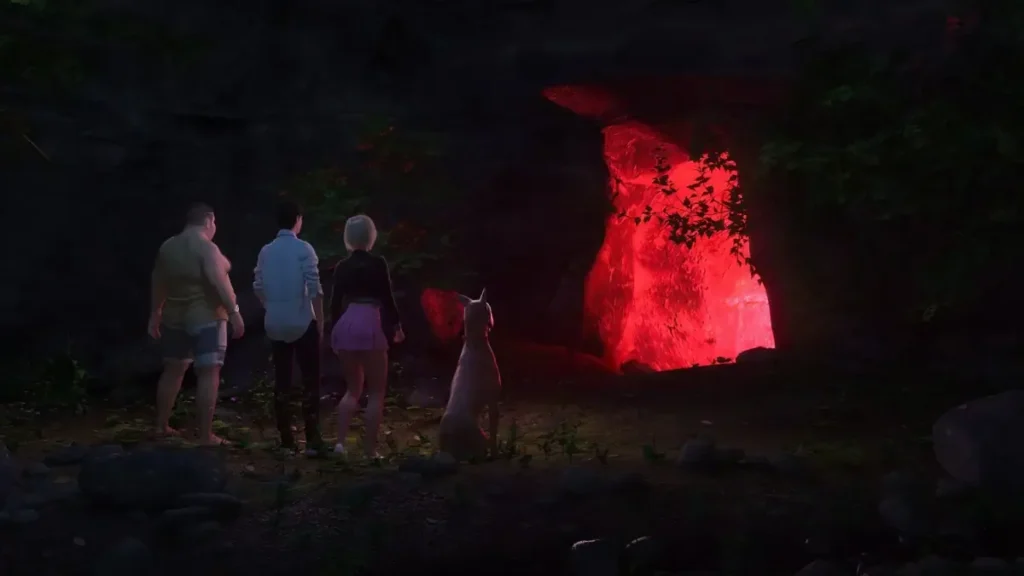
Here’s where the ordinary becomes extraordinary. While exploring a secluded cave (as one does), your character stumbles upon the Apocalust ancient relic. This isn’t just a shiny MacGuffin; it’s a corrupting artifact of immense, poorly understood power that bonds with you. This moment is the true beginning of your interactive narrative experience.
The relic grants you a suite of metaphysical abilities. We’re not talking fireballs or super strength. These are subtle, insidious, and profoundly personal powers focused on influence, perception, and emotion. Think of it as getting the developer console to reality itself, but every command you input has a moral cost. This is the core of the metaphysical abilities game aspect.
Let’s break down what these powers might let you do:
* Emotional Resonance: Sense the strongest emotional state of a person nearby—their hidden anxiety, their simmering desire, their deep-seated grief.
* Subtle Suggestion: Plant a seed of a thought or a slight nudge of impulse in someone’s mind. It’s not mind control; it’s more like tipping the first domino in their chain of decision-making.
* Perceptual Shifting: Briefly alter how someone perceives a situation or even how they perceive you.
The Apocalust gameplay brilliance is in how these powers are implemented. They’re not just buttons you press for a guaranteed effect. Using them is a deliberate choice that often opens up new dialogue branches or environmental interactions. You might use a hint of “suggestion” to defuse a volatile argument, or use “emotional resonance” to discover what a character truly needs, not just what they’re saying. But every use is a step away from your humanity and a step into the relic’s seductive promise of control.
The Apocalust ancient relic is more than a power-up; it’s a character in its own right—a silent, whispering tempter in your ear. It represents the ultimate shortcut: why work for trust, affection, or success when you can simply… nudge it into existence? This sets the stage for the game’s central, brilliant conflict.
Living a Double Life: Balancing Morality and Temptation
This is the heart and soul of the Apocalust gameplay experience. You are now living a double life. 🎭 On one hand, you’re still that young photographer trying to maintain friendships, pay rent, and live a normal life. On the other, you’re the bearer of an ancient power that offers you everything you could want, if you’re willing to compromise.
The game’s moral choice mechanics are exceptional because they are rarely black and white. You’re not choosing between “Good” and “Evil” in a cartoonish way. You’re choosing between Integrity and Desire, between authentic struggle and artificial ease. Do you use your powers to help someone overcome their trauma in a genuine, if difficult, way? Or do you simply “suggest” they forget their pain, giving them peace while robbing them of the chance to truly heal—and, not coincidentally, making them dependent on your presence?
Every choice feeds into an invisible morality system that doesn’t judge you, but simply reacts. The town, its people, and ultimately your own character change based on your path. Early decisions you think are minor can have profound ripple effects chapters later, making this a truly dynamic branching storyline game.
To illustrate the two core paths your journey can take, let’s look at how they diverge:
| Aspect | Path of Integrity | Path of Desire |
|---|---|---|
| Core Focus | Mastering the self, resisting the relic’s whispers, using powers sparingly and ethically. | Mastering others, embracing the relic’s gifts, using powers to fulfill personal wants. |
| Relationship Style | Builds authentic, slow-burn connections based on trust and mutual vulnerability. | Cultivates intense, dependent connections often built on influenced emotions or altered perceptions. |
| Town Condition | Remains stable or heals from underlying issues; people grow and resolve conflicts. | Becomes increasingly unstable and surreal; secrets fester, and social dynamics grow toxic. |
| Ending Type | Often bittersweet or sacrificially heroic, focusing on closure and personal growth. | Frequently power-centric or tragically corrupting, focusing on control or hedonistic collapse. |
A Specific Example from My Playthrough: In one early chapter, I met a reclusive artist, Elara, struggling with crippling self-doubt. She was about to destroy her latest painting. I had a few options: encourage her with normal dialogue (hard, with multiple checks), or use a minor “suggestion” to make her see hidden beauty in her own work (easy, one power use). I took the shortcut. 🎨
It worked instantly. Elara was thrilled, her attitude toward me became warmly attached, and it unlocked a new story thread with her. Fast forward ten hours. Elara’s entire artistic renaissance was now psychologically tied to my influence. When the relic’s power fluctuated during a major story event, she suffered a catastrophic crisis of faith, believing her talent was a fraud all along—because, in a way, it was. My early, seemingly compassionate choice to use power had created a fragile, beautiful lie that eventually shattered. This is the Apocalust gameplay in a nutshell: no choice is isolated, and “helping” can be the most damaging thing you do.
This constant tension is what makes Apocalust a masterclass in moral choice mechanics. You’re always asking yourself: “Do I solve this problem as a human, or as something more?” The relic offers the path of least resistance, and in a game about life’s struggles, that temptation is incredibly potent. Maintaining your normal life becomes a minigame in itself—covering your tracks, managing the stress of your secret, and watching how your miraculous interventions warp the world around you in subtle, creeping ways.
This foundation of profound choice, powered by the Apocalust ancient relic and expressed through its unique metaphysical abilities game structure, is what transforms it from a simple adult visual novel game into a memorable, psychologically engaging journey. It proves that the genre can be a vessel for stories with real weight, where the most adult thing about it isn’t the content, but the complexity of the decisions you’re forced to make.
Apocalust represents a sophisticated approach to adult gaming that prioritizes narrative depth, player agency, and meaningful consequences. The game’s innovative choice system, built on story flags and web-based branching rather than simple decision trees, creates genuinely personalized experiences where early choices echo throughout the entire playthrough. By combining supernatural elements with intimate character relationships and moral philosophy, Apocalust invites players to explore complex questions about power, temptation, and personal values. Whether you’re drawn to the romantic storylines, the branching narrative structure, or the philosophical exploration of integrity versus desire, the game delivers a rich, immersive experience that respects player intelligence and emotional investment. For those seeking an adult visual novel that treats its narrative with the same care as its content, Apocalust offers a compelling adventure where your choices genuinely matter and shape not just the story, but your own reflection on the decisions you make.